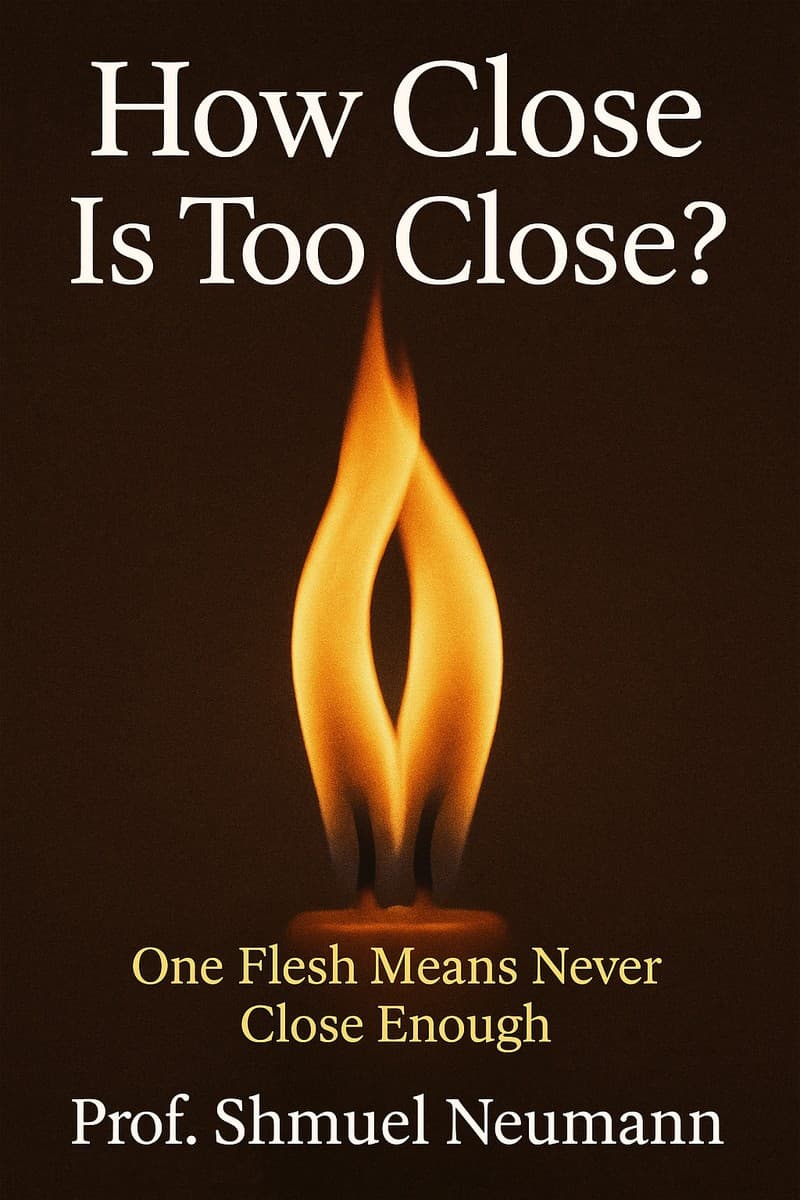
How Close Is Too Close
CRITICAL ACCLAIM
“A raw, unsparing look at boundaries in love. When does connection cross the line into collapse? For those entangled in relationships that feel too close to call, this book draws the line—with halachic clarity and emotional depth.”
Video Explainer
Audio Podcast
About This Book
Where intimacy ends and entanglement begins. A raw, unsparing look at boundaries in love. When does connection cross the line into collapse? For those entangled in relationships that feel too close to call, this book draws the line—with halachic clarity and emotional depth.
Fear of Intimacy Can Wreck Your Relationship – How to Get Over It
There’s a moment—quiet, fleeting, almost imperceptible—that reveals everything.
It happens when someone says “I love you”, and the reply stumbles, not because the feeling isn’t mutual, but because the words are too dangerous to say aloud. When laughter echoes in a room, and yet someone still feels utterly alone.
In these moments, we witness a universal paradox: we are creatures wired for closeness, yet terrified of what intimacy might demand of us. The risk of being known—truly known—can feel like standing unclothed before a storm. And so we armor up. We push away. We sabotage what we secretly crave.
This book was born from that tension.
For decades, I have sat across from individuals—bright, thoughtful, capable people—who are bewildered by the patterns in their relationships. They ask, “Why do I keep choosing people who can’t love me?”, or, “Why do I panic when someone gets too close?” Some cry because they finally met someone safe… and yet they can’t let them in.
This isn’t weakness. It’s not a flaw. It’s a wound.
How Close is Too Close? is not a book about technique—it’s a book about courage. The courage to understand the roots of intimacy fears. The bravery to confront the internal conflict between the longing for connection and the instinct for self-protection. And the hope—yes, hope—that change is possible.
In the chapters ahead, you’ll find science and story, research and reflection, tools and tenderness. But more than anything, you’ll find permission. Permission to be human. To struggle. To open. To grow. To try again.
If you have ever felt like you are “too much” or “not enough,” if you’ve ever run from someone you loved or stayed silent when you needed to speak—know this: you are not alone. And more importantly, you are not broken.
There is a path to closeness that doesn’t cost your sense of self.
You finally meet someone safe, kind, promising… and panic. You start backing away—and you don’t know why.
In How Close Is Too Close, Prof. Shmuel Neumann uncovers the hidden roots of intimacy avoidance: why we long for connection yet fear being known. Through rich narrative, cutting-edge psychology, and spiritual depth, he explores how early attachment wounds, trauma, perfectionism, and shame sabotage closeness—just when it feels most real.
This isn’t a book about tips. It’s about truth. And how to heal the instinct that says: “Love is dangerous.” You’ll learn how fear operates beneath the surface—and how to build intimacy that doesn’t cost your sense of self.
Choosing Closeness, Again and Again
By now, if you’ve read this far, you’ve likely seen yourself somewhere in these pages. In the silent retreats. In the longing glances. In the protective distance you’ve learned to keep between yourself and others. Maybe you’ve come face to face with memories you buried long ago. Or perhaps you’ve simply named something you’ve felt your whole life but never understood until now: the fear beneath the yearning.
This book was never about erasing that fear. It was about turning toward it.
Fear of intimacy is not a verdict—it is a story. A story written through years of experience, pain, disappointment, and survival. But stories, as we know, can be revised. They can be added to. They can even be rewritten.
The choice to let someone in—truly in—is not made once. It is made over and over again. In small ways: through a sigh released instead of swallowed, a truth shared instead of hidden, a hand reached for instead of withdrawn. Intimacy is not something you arrive at; it is something you practice, something you cultivate.
And sometimes, you will fail. You will flinch. You will retreat. That does not mean you are broken. It means you are learning.
There is no formula for perfect closeness. But there is hope in the imperfect kind—in the kind built slowly, with trembling honesty, mutual safety, and the grace to try again when we stumble.
If you take one thing from this book, let it be this: You are capable of love. Not just of giving it, but of receiving it. Not just of dreaming about it, but of living it—with all the risk, all the mess, all the beauty.
The armor you built once kept you safe. But now, it may be keeping you small.
You don’t have to tear it off in one violent motion. Just loosen it. One breath at a time. One relationship at a time. One act of trust at a time.
Because closeness isn’t the enemy.