Who Gets Paid When You Stay Single
How Shidduchim Got Replaced by Something That Looks Like Shidduchim
The Rema ruled five hundred years ago that a shadchan has the legal status of an agent.[1] Same as a real estate broker. Same legal weight. The shadchan brings two parties together, facilitates the transaction, and earns a fee upon completion. Beis Din can compel payment the same way it compels payment of any debt. The Sefer Yismach Lev goes further: withholding payment from a shadchan was treated so severely that in some cases Beis Din prevented a person from getting married until the debt was paid.[2] That is how seriously the halachic system took this role.
The structure embedded in that ruling is worth sitting with. The shadchan earns nothing until a shidduch happens. Not for the intake meeting. Not for the hours getting to know a family. Not for the three suggestions that went nowhere, or the fourth one where the other side said yes and you panicked and she spent until eleven at night talking you through it. All of that is the work, and all of it is unpaid. The only money that changes hands is shadchanus, collected at the engagement. If the shidduch does not happen, the shadchan worked for nothing.
This means the entire economic logic of the system points toward marriage. A shadchan who cannot get people married cannot earn a living. A shadchan who can, does. The incentive and the avodah are the same thing. Every phone call, every suggestion, every late-night conversation coaching someone through doubt is in service of one outcome: the chuppah. Not in service of engagement metrics. Not in service of platform retention. The chuppah. That is what the system was designed to produce, and for centuries, that is what it produced.
The Gemara in Kiddushin says the Torah writes “a man takes a woman” because it is the way of a man to seek his lost object.[3] She was taken from him. He returns to seek what belongs to him. The language assumes someone in the middle — someone who sees both sides and brings them together. Forty days before the formation of the child, a Heavenly Voice announces the match.[4] The decree is divine. The search is human. And the human infrastructure for that search, for as long as anyone can remember, was a person who knew people well enough to hear what the Heavenly Voice had already said.
Rav Yosi was asked by a Roman matron what Hashem occupies Himself with since finishing creation. He answered: He arranges marriages. She laughed. She lined up a thousand of her slaves and maidservants and paired them off in a single night. By morning every one of them was bruised and miserable.[5] She came back to Rav Yosi and conceded that his God’s work was greater than she had understood. The Midrash is not a story about how hard marriage is. It is a story about what happens when you pair people without judgment — when you put them in a room and let them sort themselves out based on proximity and availability. The matron ran a mixer. It produced casualties.
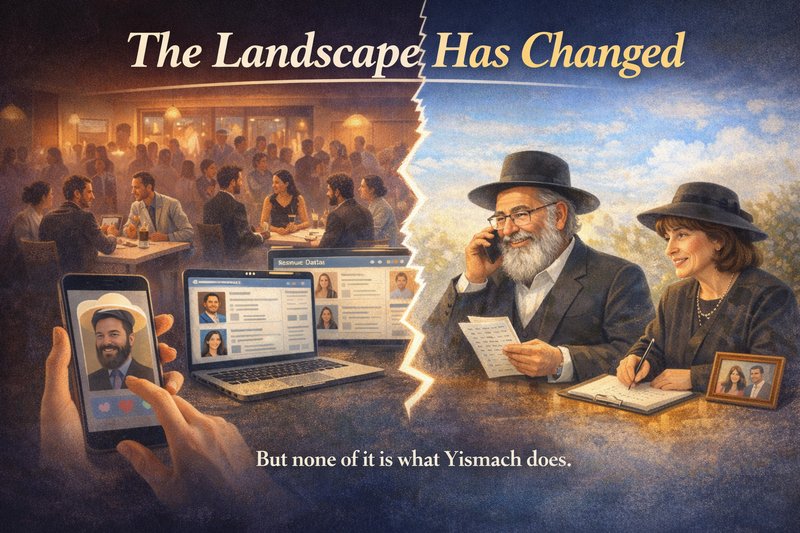
Something changed. Not overnight. A singles event appeared in one community. A resume database launched in another. A website let people browse profiles directly, filtering by age, height, city, photograph. Each innovation seemed reasonable. Each one seemed like it was adding to the system — giving people more options, expanding what was possible, filling gaps the shadchanim couldn’t cover. Nobody was trying to dismantle shidduchim. The apps and the events and the databases were just trying to help.
But the economics were different. Every one of these new models collected its money before any outcome occurred. The app charged monthly. The speed dating company charged per event. The mixer charged at the door. The Shabbaton charged per person. The singles cruise charged per berth. The networking brunch and the rooftop social and the retreat weekend with the keynote speaker and the breakout sessions and the Friday night oneg where everyone is supposed to mingle naturally — every one of them collected the money up front. The revenue came from participation, not from results. A sold-out evening that produced zero shidduchim and a sold-out evening that produced ten were identical on the balance sheet.
An app that marries off its users is an app that loses its subscribers. The push notification that says “new matches waiting” is not built to help you find your husband tonight. It is built to get you to open the app tomorrow. The premium tier that unlocks better filters is selling a more comfortable search, not a faster exit. The product is optimized for engagement — time on platform, sessions per week, monthly retention. Nobody in a product meeting ever said the words “keep them single.” Nobody needed to. When revenue comes from continued participation, the product optimizes for continued participation. The math takes care of itself.
And then the language got borrowed. Shidduch event. Shidduch mixer. Shidduch Shabbaton. Shidduch app. The word started appearing on flyers for things that had nothing to do with what the word means. Shidduchim means a shadchan who knows both sides uses judgment to bring them together. A mixer means people in a room figuring it out themselves. A resume database means scrolling through photographs and filtering by zip code. A speed dating event means evaluating strangers on a four-minute clock. Putting “shidduch” on the branding gave these operations the warmth and legitimacy of a system rooted in halacha. The economics underneath ran in the opposite direction.
The frum community absorbed all of it without noticing the inversion. Because the events looked Jewish, because the apps were marketed to the frum world, because the language was familiar, nobody asked the structural question: does this person earn more money when I get married or when I keep looking?
The shadchanim felt it. The phone stopped ringing. The singles who used to come to them started showing up at mixers instead. Parents started sending resumes to WhatsApp groups and Facebook pages instead of to a person who would sit down and read them. The culture told everyone that more options meant better options, that access to a thousand profiles was better than trusting one person’s judgment, that technology had made the old way obsolete. The shadchan became the last resort — the person you turned to after years of everything else had produced nothing, and by then the frustration and the cynicism had set in, and she was expected to fix years of accumulated disappointment in a single phone call.
Many walked away. Being a shadchan was already thankless. You invest hours in a suggestion and get told no before the other side hears the name. You bring two people to a fourth date and one disappears without a word. A family you helped forgets you exist the moment the l’chaim is over. You work for free unless it works, and most of the time it doesn’t. When the market moves on top of all that, when the phone stops ringing and the singles stop coming and the culture tells everyone the old way is finished — walking away makes sense. It is understandable.
It is also a catastrophe. The people who left were the only people in the system whose livelihood depended on marriages happening. The people who replaced them — the event organizers, the app developers, the platform operators, the mixer hosts — earn their money whether anyone gets married or not. Most of them earn more money the longer nobody does.
Others adapted by becoming the thing that displaced them. They built their own databases. They started hosting mixers and singles gatherings. They moved into the new landscape rather than standing as an alternative to it. A shadchan running a self-selection mixer is a shadchan who has stopped being a shadchan and started being an event planner. The work is different. The economics are different. The role is different. The word on the door is the same.
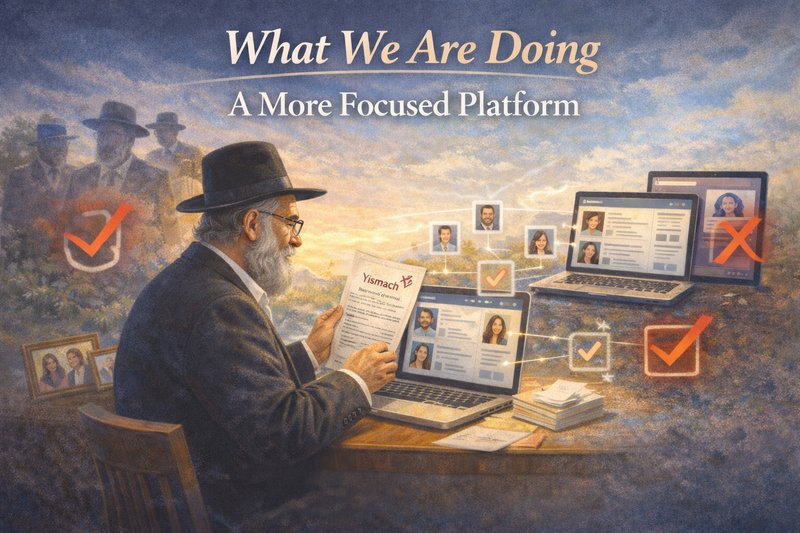
Yismach started in 2011 with over two hundred shadchanim on the roster. Recognized, established names — the people everyone knew, the names that came up whenever someone asked who to talk to. Within a few years, many of them had stopped being shadchanim entirely, or stopped using the platform, or built competing services on the side, or started running the same kinds of events that had displaced them. The roster dropped to about a hundred. Then, limiting the English site to shadchanim who were active, aligned, and actually doing the work, the number came down to about forty.
Two hundred to forty. That is not a failure of recruitment. That is the landscape. The forty who stayed are the ones who kept doing the work through all of it. Through the ingratitude. Through the rejection. Through the silence. Through the years when the culture said what they do is obsolete and the evidence kept saying otherwise — because the couples who got married kept getting married through shadchanim, not through apps, and the singles who spent years on platforms kept spending years on platforms.
Yismach is built on those forty. On the premise that a shadchan who knows people, who uses judgment, who picks up the phone, who gets paid at the engagement and not one day before — is not a relic. She is the mechanism by which shidduchim actually happen. She always has been.
AI extends what she can see. A database of thousands contains matches she could never find on her own, because no one person can hold that many names in memory at once. The AI surfaces possibilities — a name in Teaneck that the shadchan in Bnei Brak would never have encountered, a profile entered by a different shadchan working a different segment of the list. But the AI does not call anyone’s mother. It does not sit across from a nervous girl and figure out in twenty minutes what she actually needs, which is almost never what she said she wants. It does not read between the lines of a boy’s hesitation after a second date and know whether to push or pull back. A shadchan does. That is the work. That is what earns the shadchanus. And it only earns it when the shidduch happens.
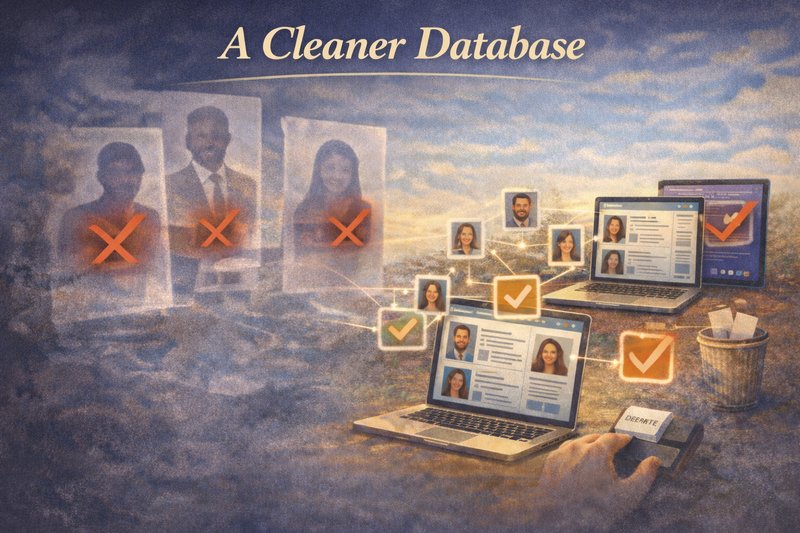
Stale profiles are being cleaned out. Registration fees have been slashed — the Hebrew site cut by 75%, the English site down to ten dollars to sign up, ten dollars a month. Because a platform is only as good as the people on it, and every real person who walks through the door is one more possibility for every shadchan and every member in the system. But the people on the platform are there to be matched by shadchanim. Not to browse. Not to swipe. Not to shop. To be seen by a person whose judgment they trust and whose livelihood depends on getting it right.
Five hundred years of a structure that aligned the shadchan’s income with the community’s need. One generation of innovation that replaced it with a marketplace that profits from the search. The shadchan gets paid when you get married. Everyone else gets paid while you’re still looking. Halacha designed a system that worked. The market designed a system that keeps working — for the market.
The Rema got it right five hundred years ago. Pay the shadchan at the engagement. Make the person doing the sacred work earn her living from the sacred outcome. Everything else that calls itself shidduchim but collects its money before the outcome — that is something else. Call it what you want. It is not shidduchim.
Footnotes
[1]Rema, Shulchan Aruch, Choshen Mishpat 185 (gloss on Mechaber). The shadchan has the legal status of an agent and can compel payment in Beis Din, identical to a real estate broker.
[1]Sefer Yismach Lev. One has an obligation to pay a shadchan at the engagement. Withholding payment is so severe that some were prevented by Beis Din from getting married until they paid their debt to the shadchan.
[1]Kiddushin 2b: “The Torah writes ‘a man takes a woman’ — because it is the way of a man to seek his lost object.”
[1]Sotah 2a: “Forty days before the formation of the child, a Heavenly Voice goes out and announces: the daughter of so-and-so for so-and-so.”
[1]Bereishis Rabbah 68:4. Rav Yosi was asked by a Roman matron what Hashem does since completing creation. He answered: He arranges marriages. She attempted to do the same with a thousand slaves and maidservants. By morning, every one of them was injured and miserable.